

Guide to Wedding Seating Charts
Your wedding seating chart is an essential detail of your reception. It informs your guests where they will sit and who will share their table. However, seating charts aren’t just functional—they’re also a design moment that reflects your wedding colors, typography, and overall aesthetic.
You need a seating chart at your wedding reception unless you’re using escort cards instead. You only need one or the other, but you do need a clear system so guests can find their table quickly and smoothly.
If you’ve decided on a seating chart but aren’t sure where to start, this guide covers everything: how to design an easily readable chart, how to seat guests with good etiquette, and when to place your order.
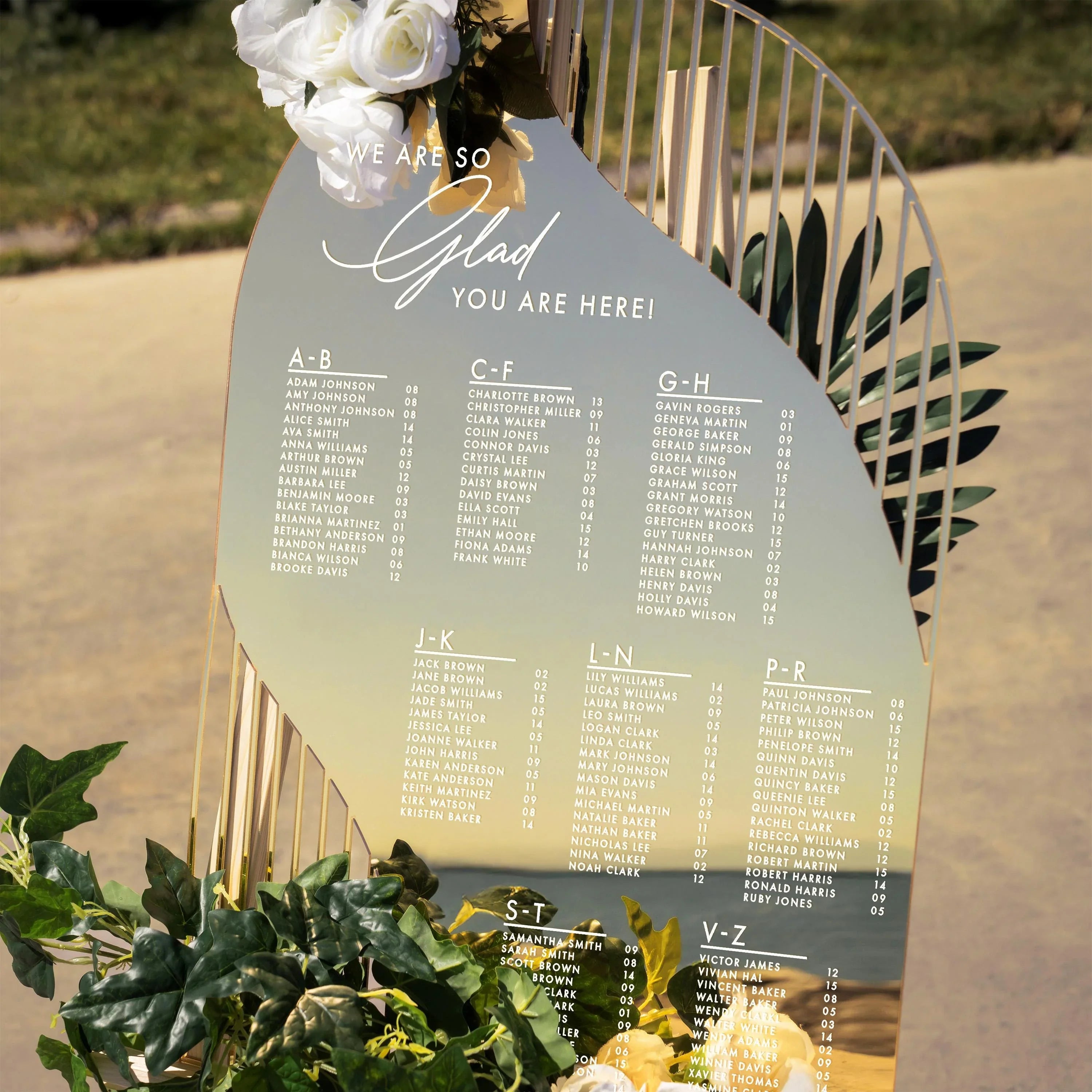
Designing a Beautiful and Functional Seating Chart
While your seating chart is part of your décor, it’s also a high-traffic tool. Guests should be able to locate their names fast—without creating a line at the entrance.
Choose the right layout: alphabetical vs. table order
Most couples organize seating charts in one of two ways:
- Alphabetical by guest last name (recommended for speed and guest experience)
- By table number (clean and classic, but slower to scan for large guest lists)
If you list by table number, keep the layout visually balanced (for example, the same number of tables on each side) so the sign feels polished.
Prioritize readability
Don’t cram too many names onto one sign. Your chart should be readable from a comfortable distance—especially for older guests. If your guest list is long, consider listing by couple or household (e.g., “Mr. & Mrs. Jones”) to save space while keeping it tidy.
Pick a size that fits your guest count
Acrylic seating charts are commonly ordered in a range of sizes, from smaller formats for intimate weddings to larger panels for bigger receptions. As a practical guideline, choose a size that allows generous spacing between names and sections—then scale up if you’re adding more guests, multiple columns, or larger typography.
Tip: If you want an extra “wow” moment at the entrance, pair your seating chart with a matching acrylic welcome sign for a cohesive first impression.
Etiquette Guidelines for Seating Your Guests
When assigning tables, start with comfort and conversation flow. Seat guests with people they already know when possible—no one wants to feel stranded at a table of total strangers.
- Keep the peace: Avoid seating family members who don’t get along at the same table.
- Skip the “singles table”: Seat single guests with friends or family they know. If they won’t know anyone, consider offering a plus-one.
- Place VIPs thoughtfully: Make sure parents, grandparents, and your wedding party have comfortable sightlines and easy access to key moments (speeches, first dance, etc.).
Also decide early whether you’re doing a sweetheart table or a head table—your choice affects the best seating layout for family and the wedding party.
When to Order Your Seating Chart
Start sketching table assignments as RSVPs come in. The ideal time to finalize your seating chart is once your guest list is nearly complete—then place your order with enough buffer for proofing, production, shipping, and last-minute RSVP adjustments.
To avoid stress, treat your table count and numbering as “locked” before you approve your final design proof.
Featured Nouarch Acrylic Wedding Seating Charts
Nouarch Studio seating charts are crafted in premium acrylic and customized to your guest list and table layout. Here are a few standout styles to inspire your reception entrance:

Rome
Luxury, statement-forward styling with a polished presence.

Milan (Frosted)
Soft, modern diffusion with clean readability and minimal glare.

Berlin (White)
Crisp, timeless, and perfect for minimalist or classic décor.

Vienna (Black)
Bold contrast with a modern, elevated look for evening receptions.

Daisy (Gold Mirror)
High-impact reflective finish that turns your seating chart into décor.
Final Thoughts
Your seating chart should be beautiful, functional, and effortless to read. With a clear layout, thoughtful etiquette, and an acrylic sign that matches your wedding aesthetic, you’ll create a smooth guest experience—and a reception entrance that feels intentional and elevated.


